Ventilation is one of those building problems that is invisible until it is measured. A lecture theatre can look, feel and smell entirely normal while carrying a carbon dioxide load that indicates air is barely moving. The occupants have no way to tell, and neither does the facilities team, unless something is measuring it.
At single-room scale this is straightforward. At the scale of a university, with hundreds of teaching spaces spread across campuses hundreds of kilometres apart, it becomes a connectivity problem before it becomes a sensing problem.
The University of Melbourne had already solved that part. It built out network coverage across its Carlton, Parkville, Creswick, Dookie and Burnley campuses in partnership with Meshed from 2019, which meant that when a reason to measure air quality at scale arrived, the infrastructure to carry the data was already in the ground.
Why measure carbon dioxide in a teaching space?
People exhale carbon dioxide. In a sealed or poorly ventilated room, it accumulates in proportion to how many people are present and how long they have been there. In a well-ventilated room, it does not.
That makes it a useful and very cheap indicator. It tells you not how clean the air is in an absolute sense, but whether the air is being replaced at a rate that matches the number of people in the room. For a facilities team deciding where to direct attention across hundreds of rooms, that ratio is exactly the right signal.
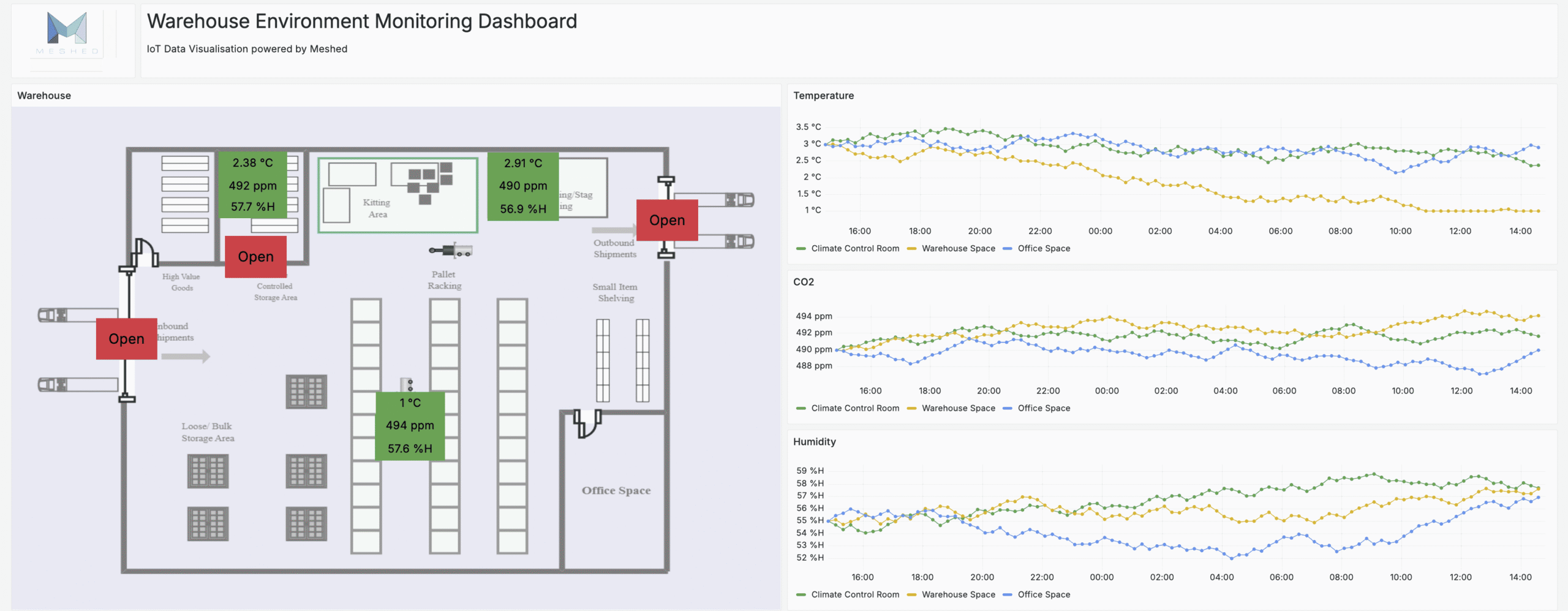
The sensors installed measure carbon dioxide alongside temperature and humidity, which together describe the comfort and ventilation condition of a space rather than any one variable in isolation.
What was installed
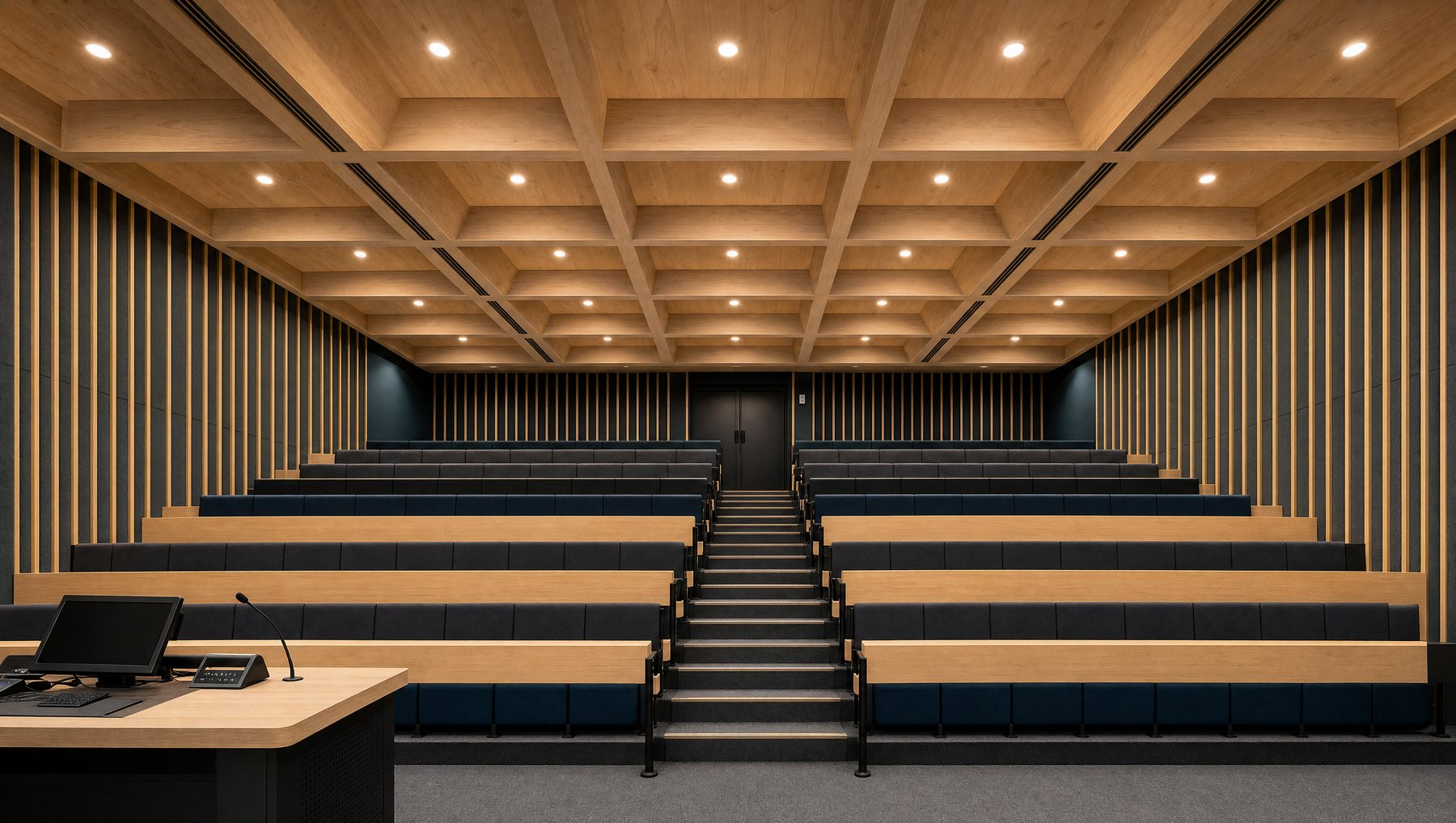
The university's Smart Campus team deployed more than 1,100 Elsys carbon dioxide sensors across roughly 900 teaching spaces and lecture theatres.
Coverage spans five campuses, including the metropolitan Carlton and Parkville sites and the regional Creswick, Dookie and Burnley campuses. The network carrying the data was established with Meshed from 2019, which is what made the regional campuses viable to include at the same standard as the city ones.
How the data was actually used
Raw sensor readings on their own would have produced a wall of numbers and no decisions. The useful step was contextualising them.
The university combined air quality data with occupancy counters and its timetable system. That combination answers a much better question than any single feed. Rather than asking what the carbon dioxide level in this room is, the team could ask whether this room is coping with the number of people scheduled into it right now.
A real-time alerting framework then evaluated that risk continuously, which let central teams act rather than investigate. Where a space was not keeping up, the response was either adjusting ventilation or deploying portable air purifiers to that room specifically.
Why this scales to any large estate
The pattern here is not specific to universities, or to teaching spaces.
Any organisation running a large property portfolio faces the same structural problem, which is that the buildings vary enormously in age and ventilation performance, the people using them move around constantly, and the facilities team is centralised while the problems are distributed. Measuring one building well does not help. Measuring all of them, continuously, and combining that with who is actually in them, does.
The infrastructure argument matters too. The university did not build a network to monitor air quality. It built a network, and air quality became one of the things it could carry. That is consistently the difference between a sensing project that stops at one use case and a platform that keeps absorbing new ones.
More on facilities management · indoor environment monitoring.
This deployment was documented by IoT Hub, Australia's Internet of Things trade publication.
“How the University of Melbourne used LoRaWAN and IoT in 'COVIDSafe' strategy”, IoT Hub, 30 June 2022.
Real-time intelligence across your entire estate.